Performory
performory2025
UX ResearchInterface DesignBrand
FigmaAdobe SuiteChat GPTMidjourney
~ 5 mins read

A practice platform for musicians who struggle with memory lapses and confidence under pressure.

The Overture: How It Began

This project started with the question: why do musicians lose confidence on stage when they need it most?

Coming from a music background, this matter felt personal to me. I've seen how someone can be highly disciplined, well-prepared, and technically strong, and yet still face stage fright and have their confidence collapse at the most important moments.

That pushed me to look deeper into the problem and study stage fright not only as an emotional response, but as a system of multiple triggers.

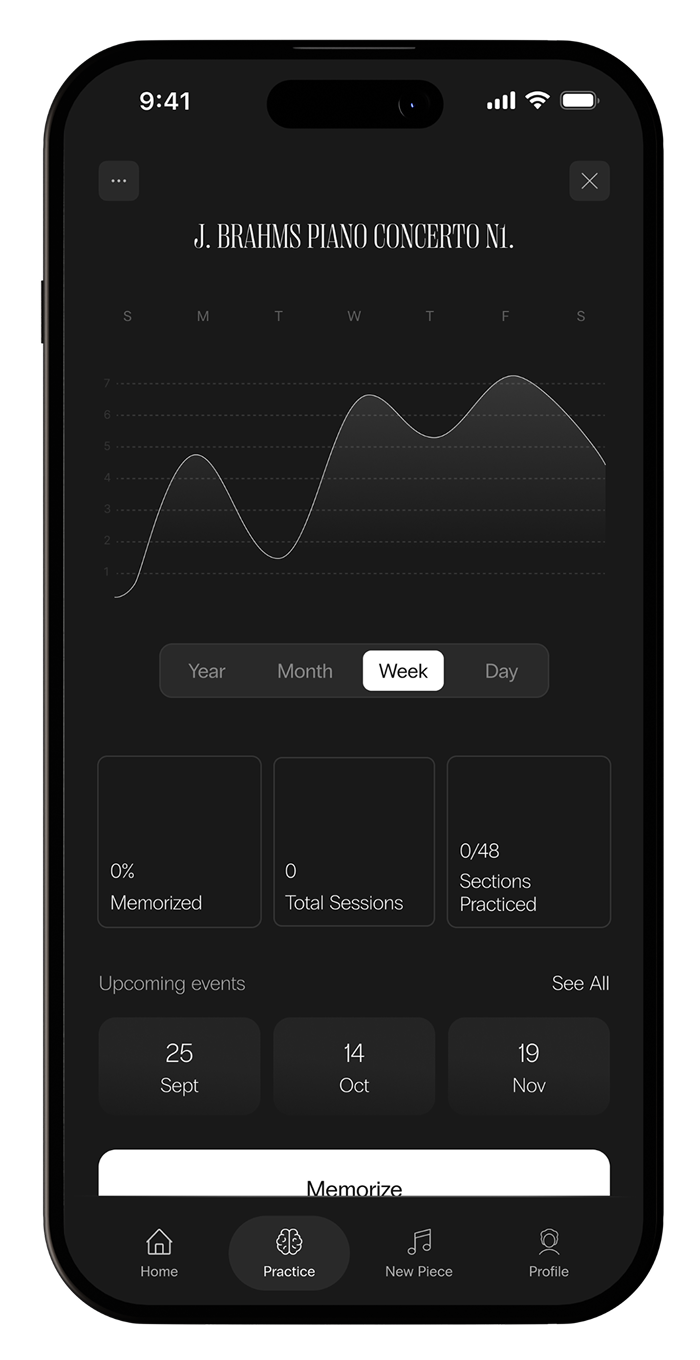
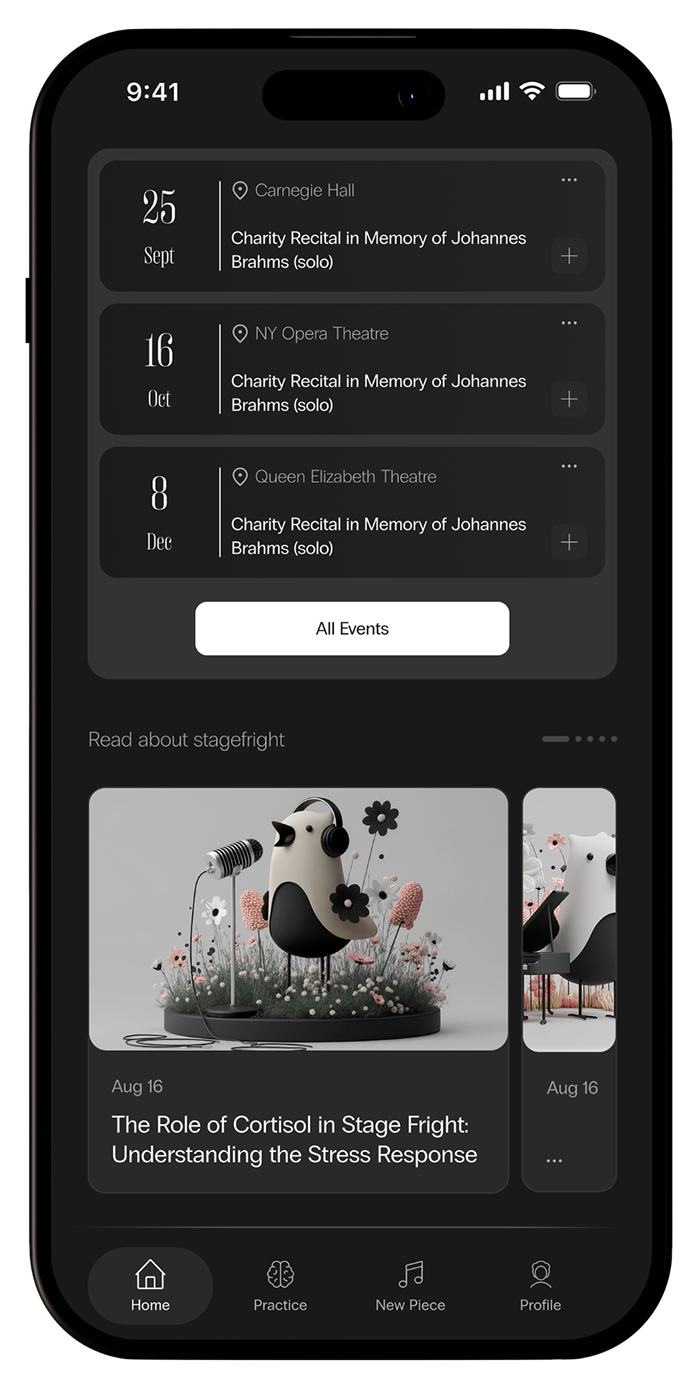
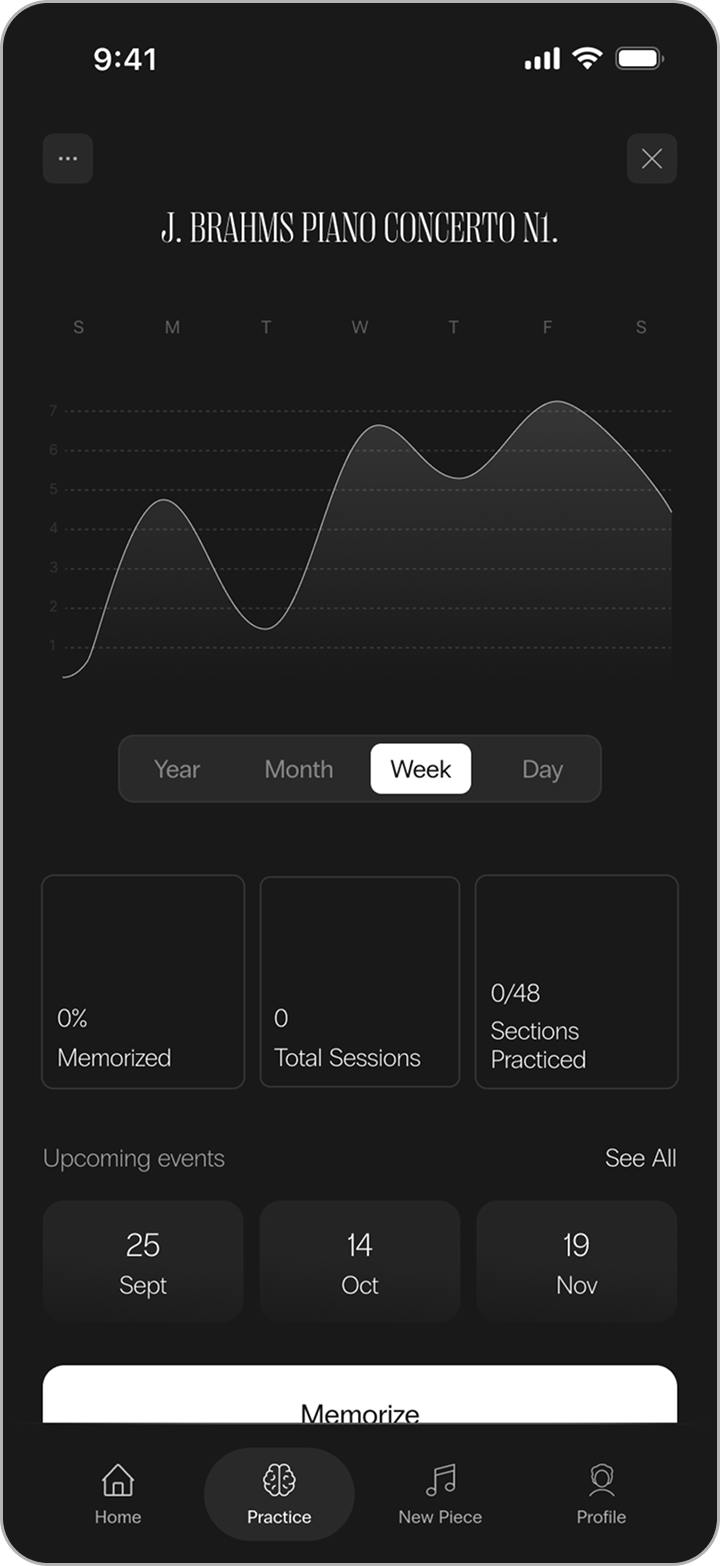
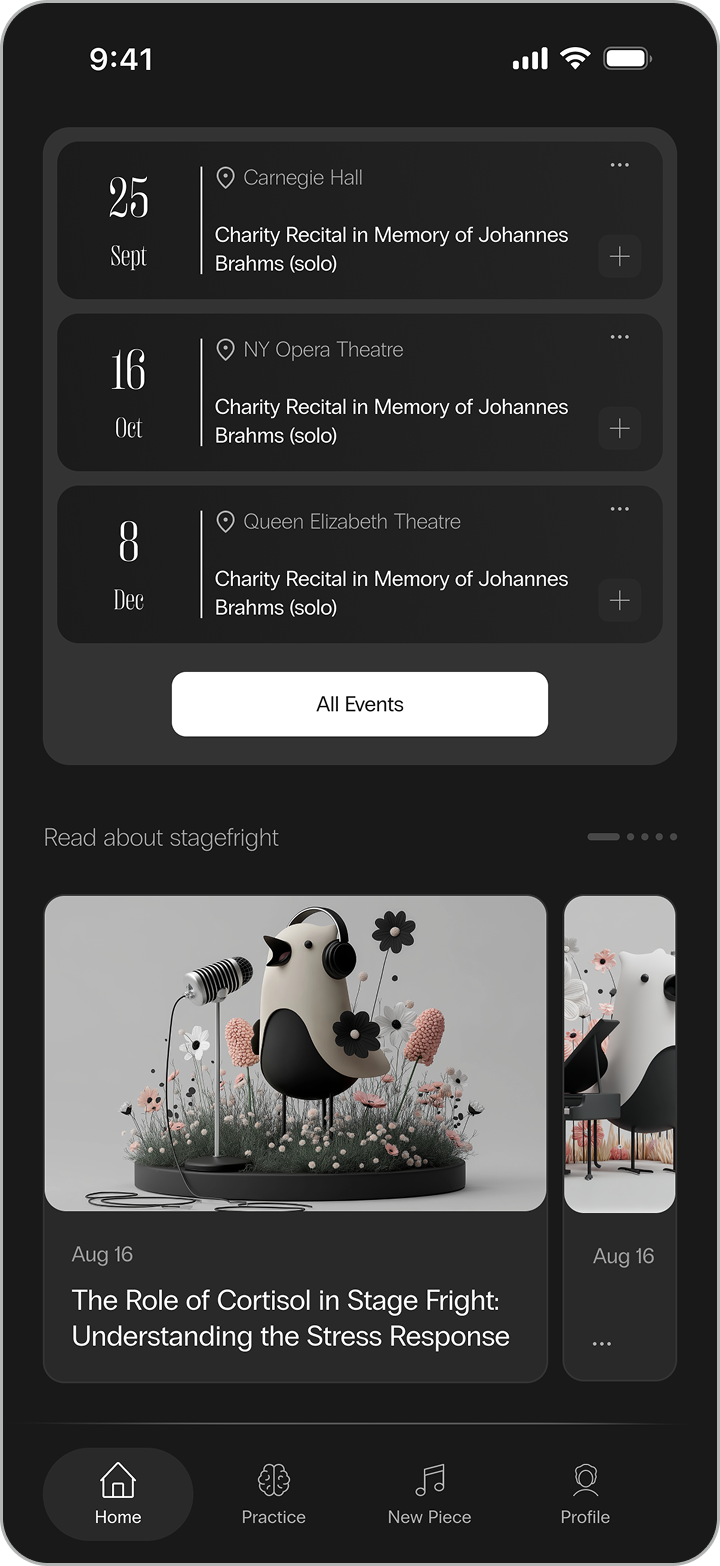
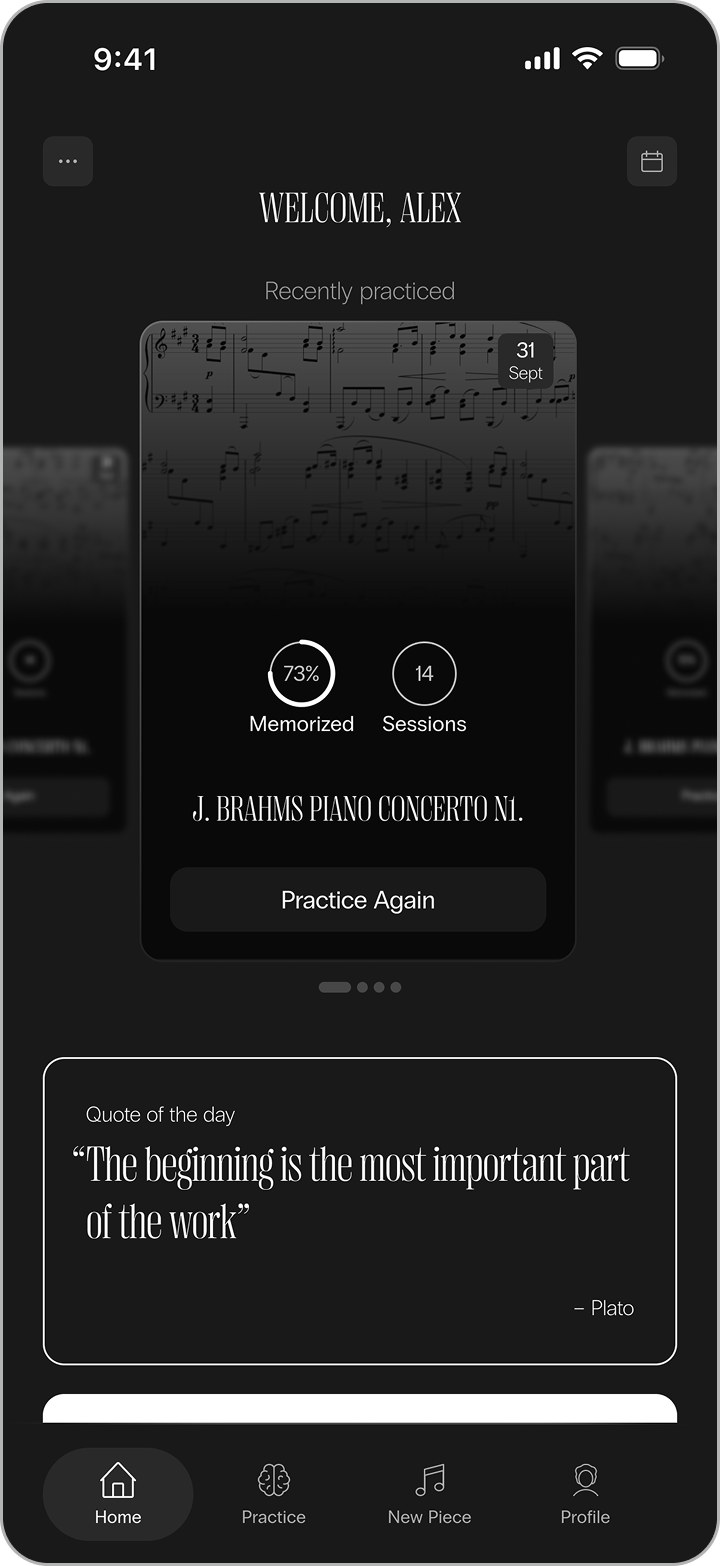
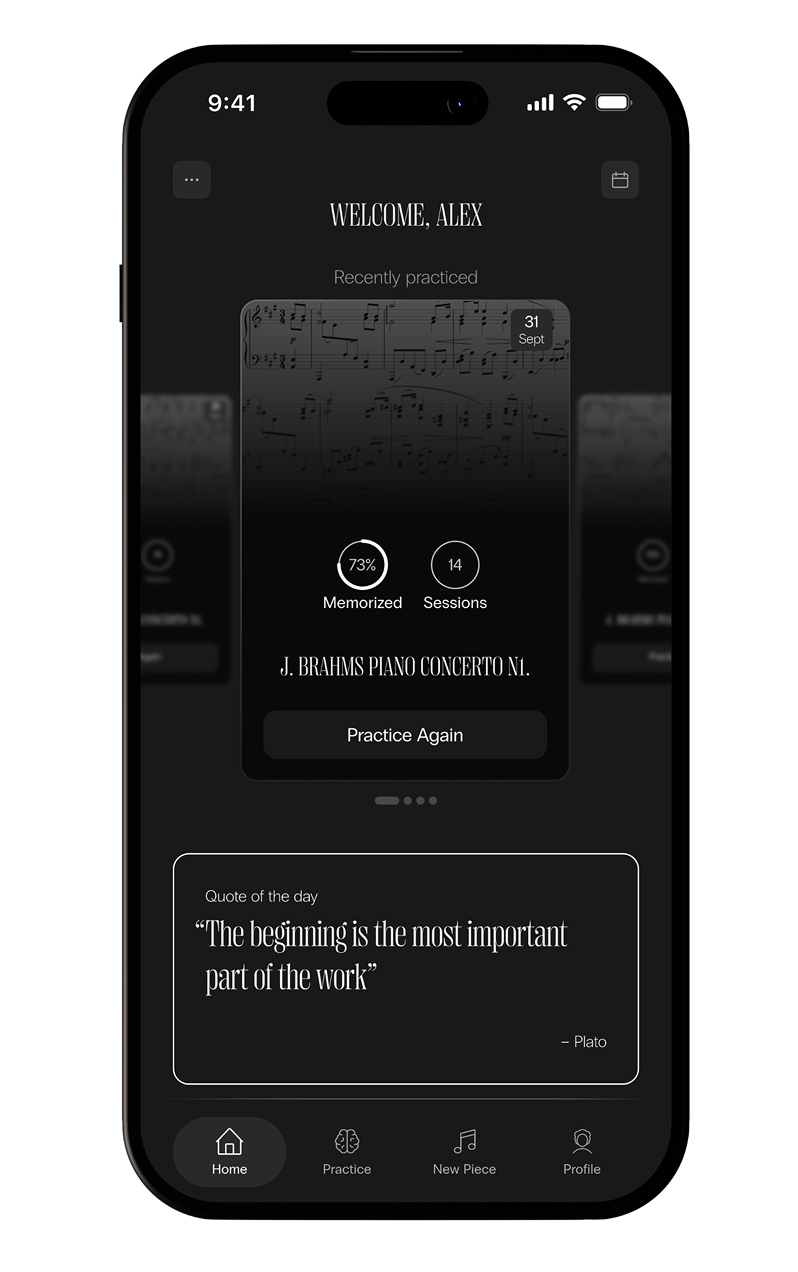
Performory overview and events screens

Diving Deeper Into the Problem

To ground the project, I interviewed five musicians and used affinity mapping to understand what actually sits underneath stage fright.

The strongest pattern was that performance anxiety was rarely just about fear on its own. More often, it was tied to a loss of trust in preparation—especially when musicians felt unsure about memory, recall, and readiness under pressure. Themes like perfectionism, memorization, support, self-awareness, responsibility, and performance frequency kept showing up across interviews, which made the problem feel both emotional and behavioural at the same time.

That shifted how I framed the opportunity. Instead of designing for a broad topic like performance anxiety among musicians, I pivoted to something more tangible: musicians lacked a structured way to prepare material and build confidence before a performance.

see the research findings

Memorization emerged as the clearest product entry point at this stage. Research suggested that what often breaks down on stage is not effort, but reliable recall. That made memorization a functional problem, not just a practice habit, and shaped the direction of the product.

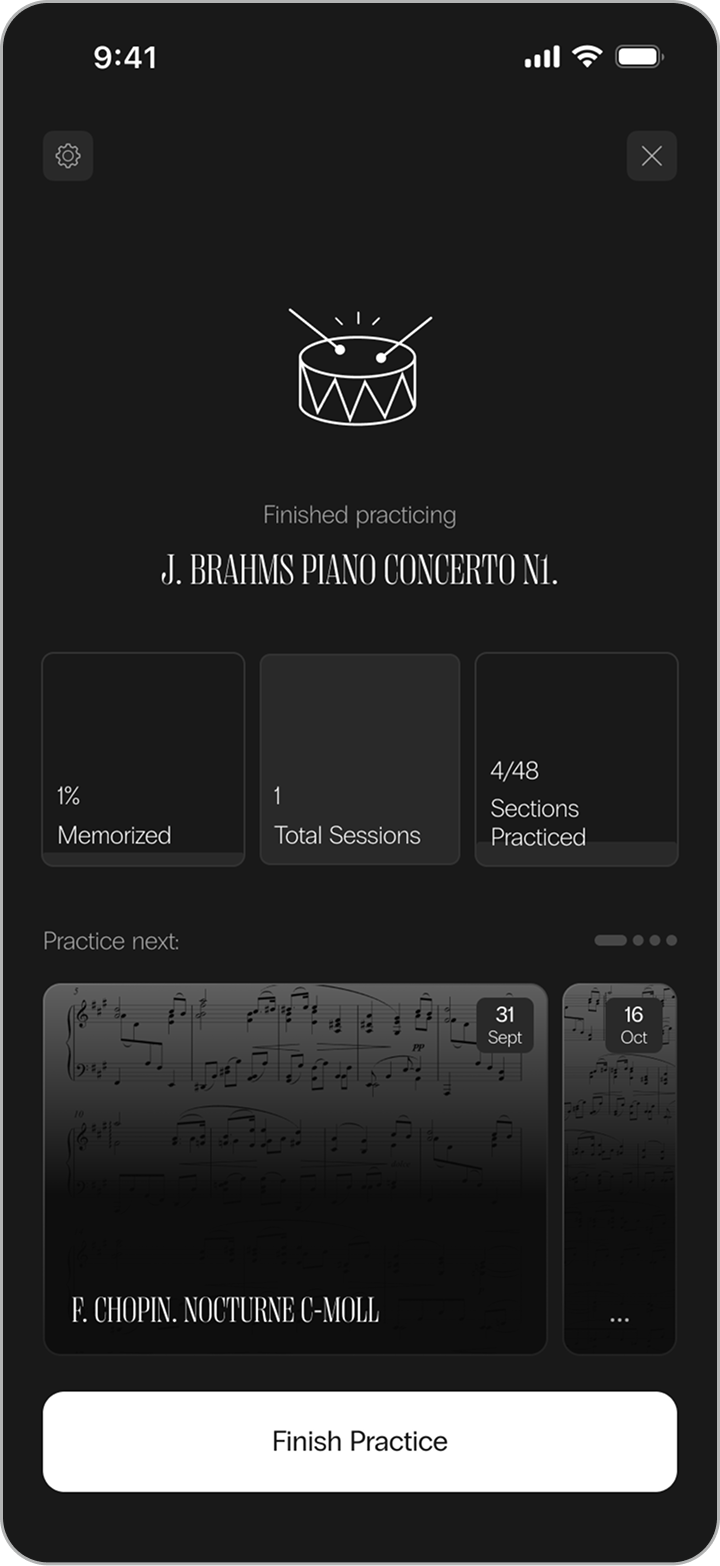
Performory app screens

The Game Plan

During research, I noticed a recurring pattern in how musicians responded to memory slips: when they forgot a part, they usually went back to the beginning of the piece or restarted from a familiar section. While this pattern seems to be a natural instinct, this behaviour keeps reinforcing the parts they already know best, while weaker transitions and less stable passages stay relatively untouched.
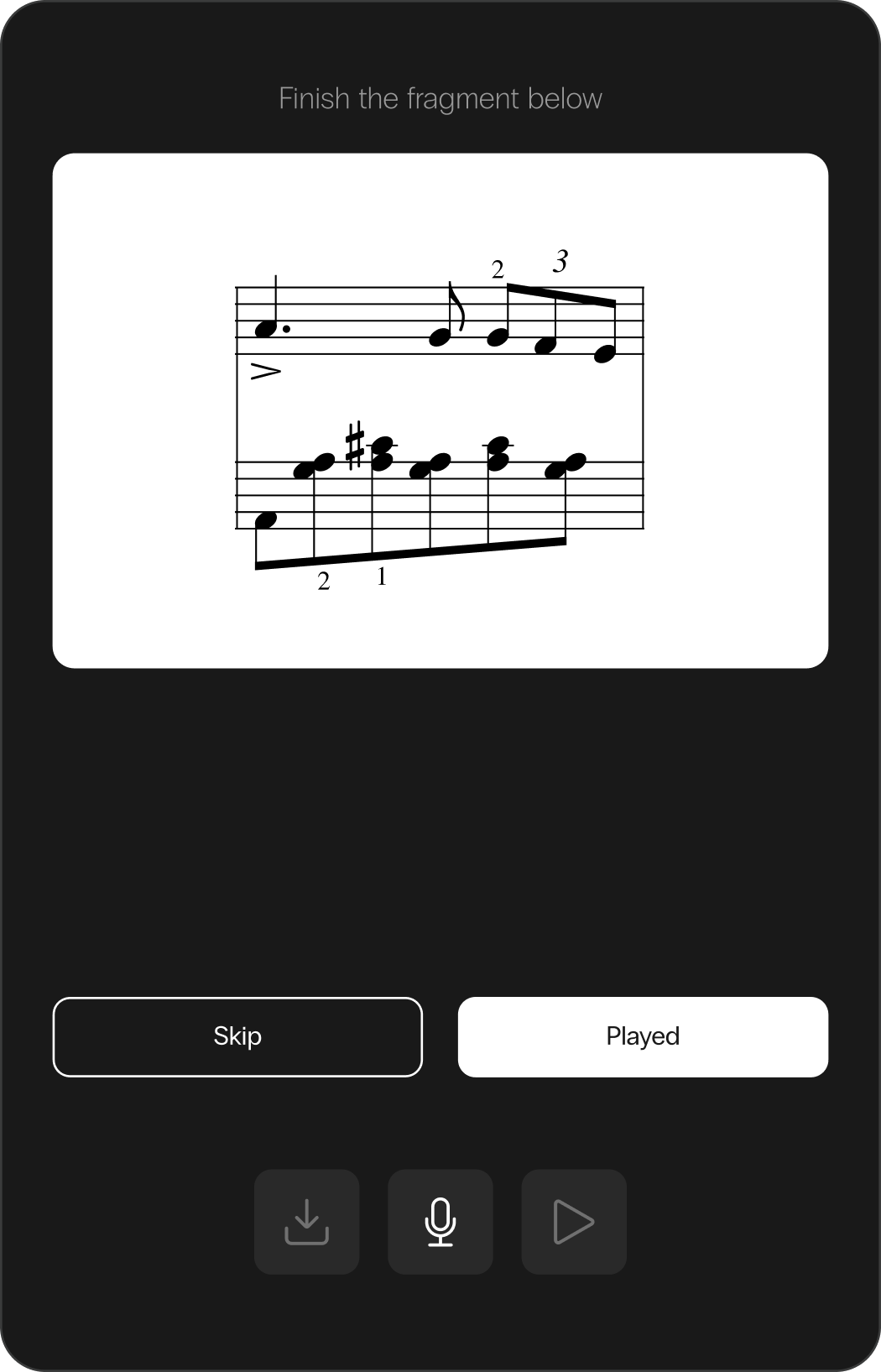
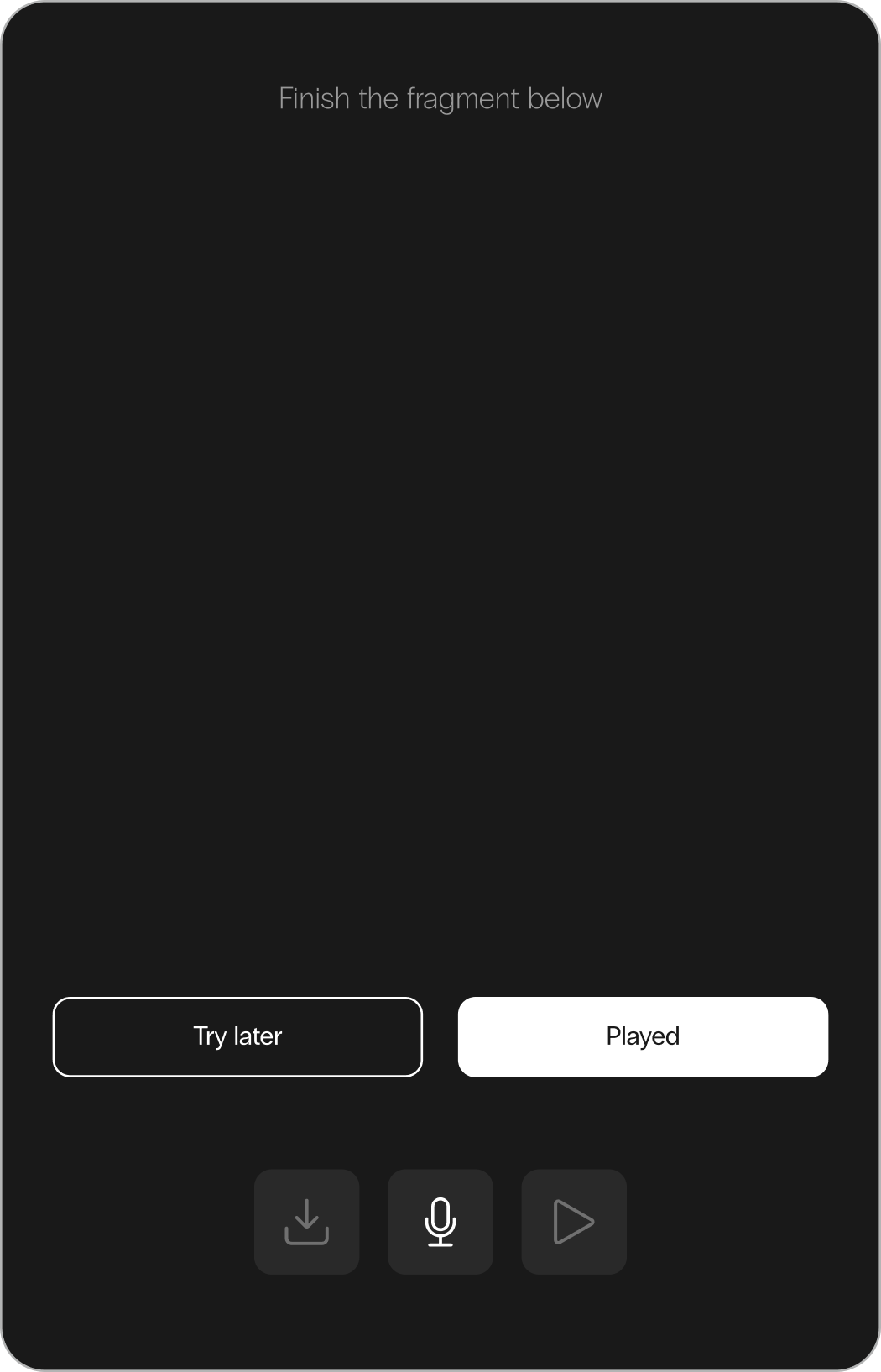
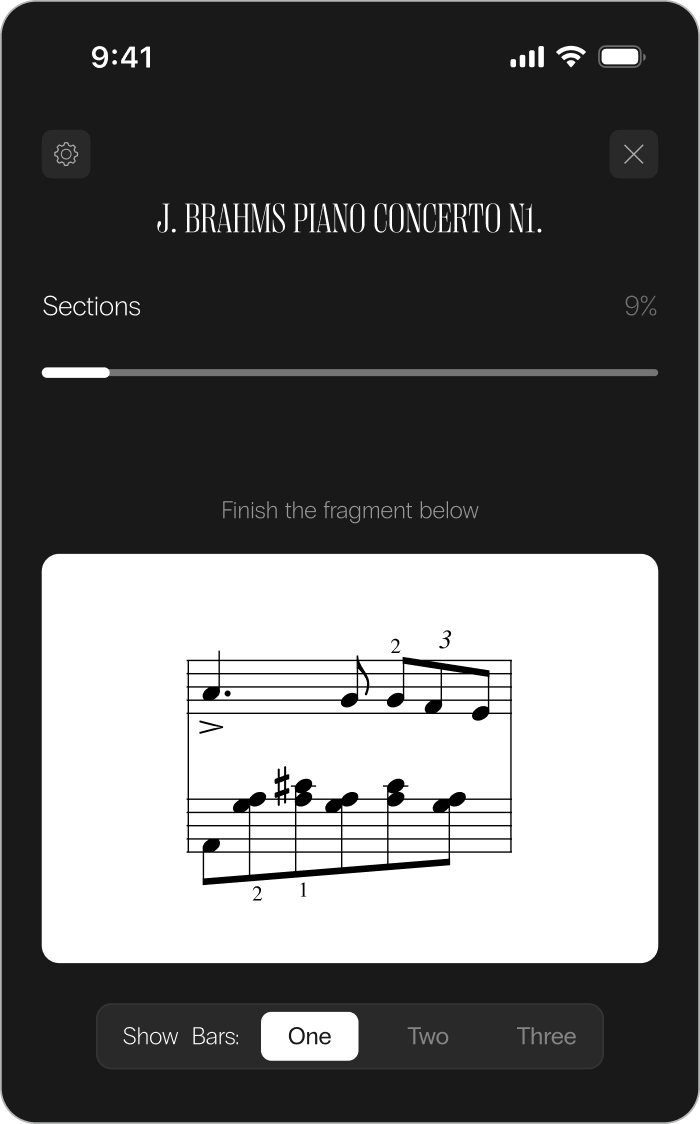
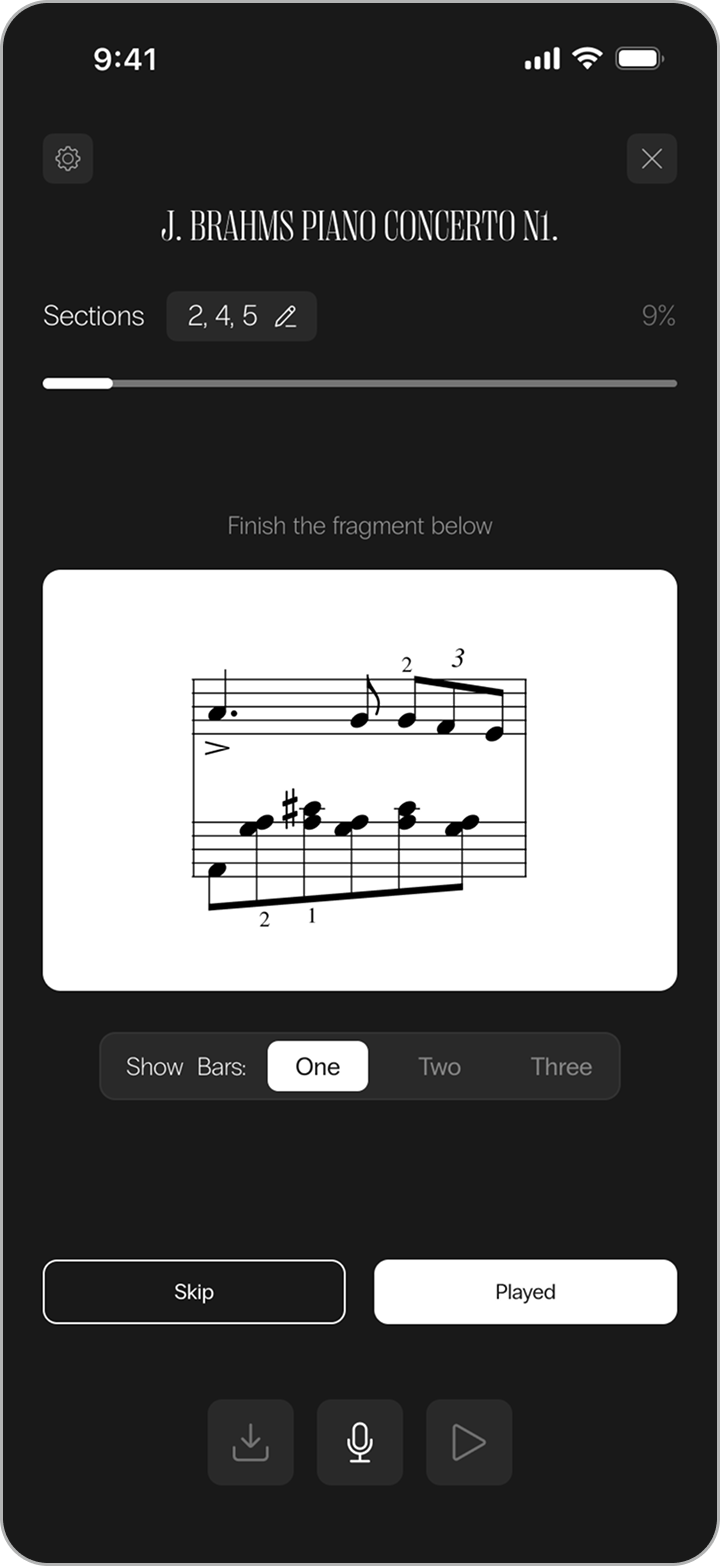
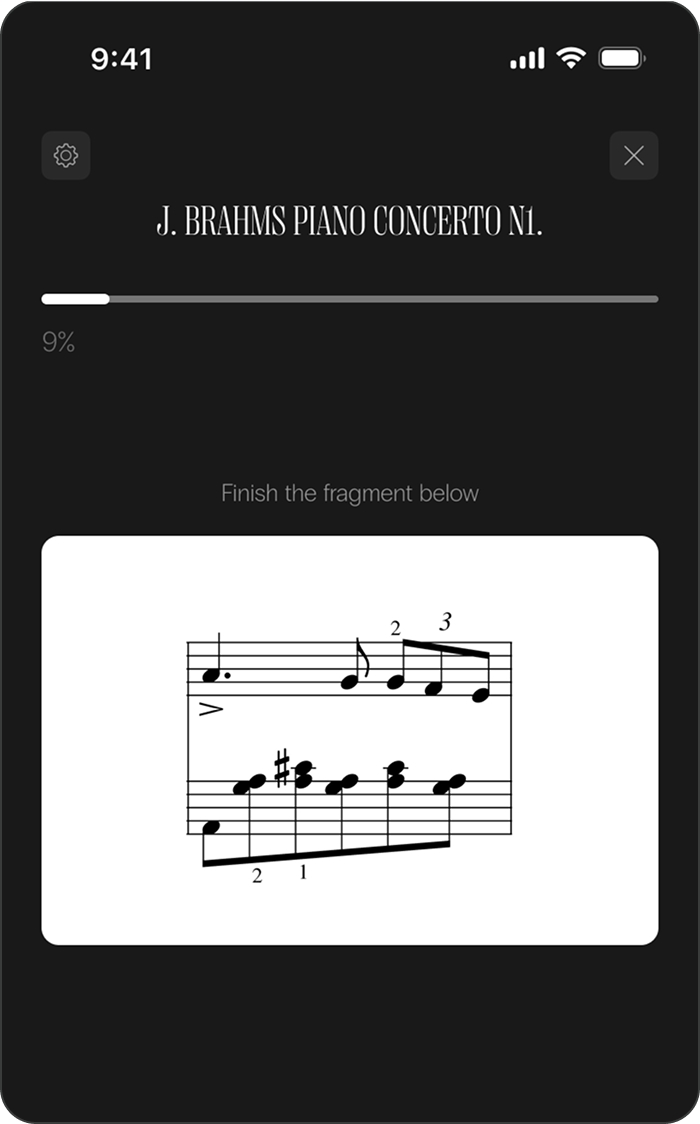
That became the thinking behind Performory's core memorization exercise. If the real challenge in performance is being able to recover when memory breaks, then practice should train that skill directly. So, the app shows a random bar from the piece and asks the musician to continue from that point entirely from memory.

The goal of the exercise was to shift memorization away from passive repetition and closer to the reality of performance, where recall rarely arrives in a neat, predictable order.

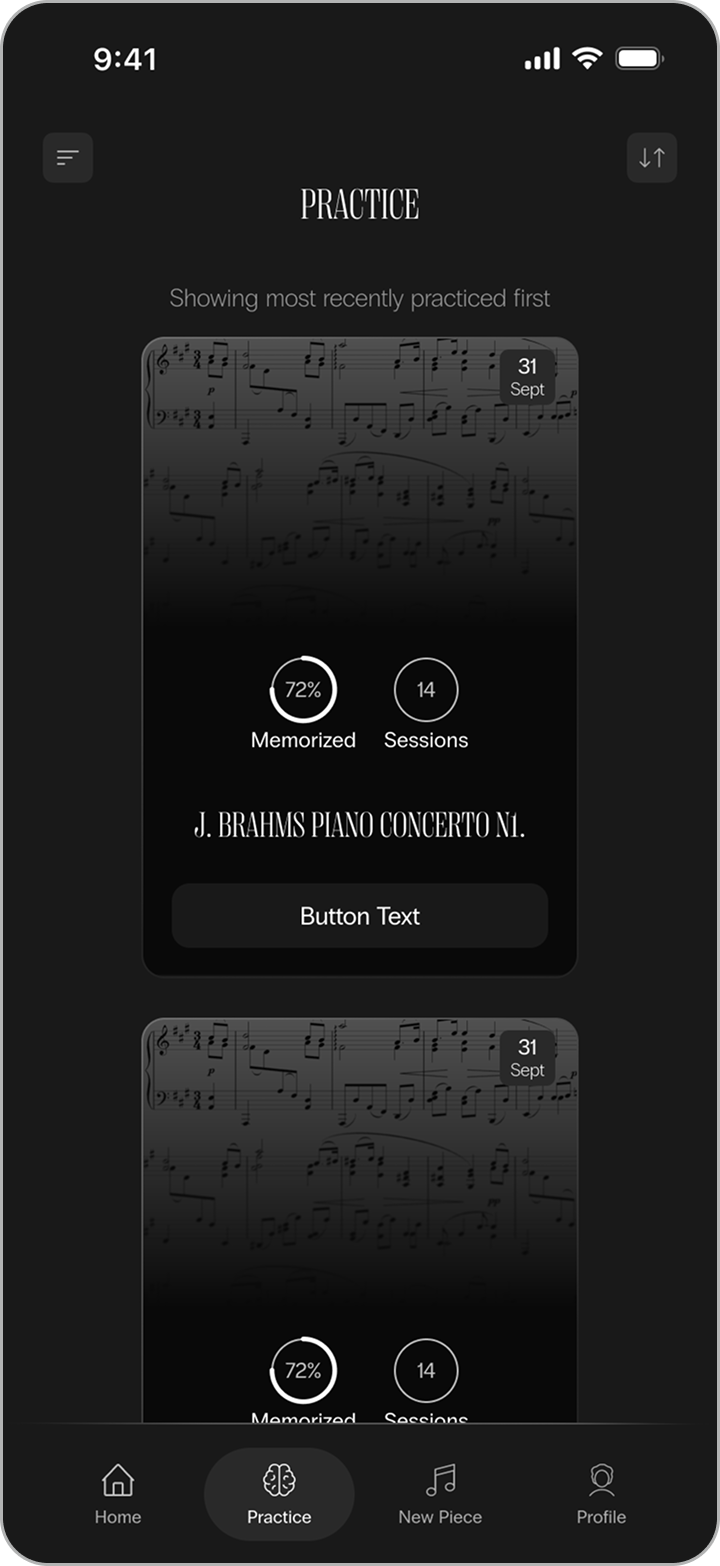
Library, Overview and Practice screens

Giving Just Enough Help

Early testing revealed a predictable failure point.

If a musician couldn't recognize a single random bar, they either had to skip multiple prompts in a row or abandon the session altogether. Very quickly, the experience started to feel like failure instead of practice.

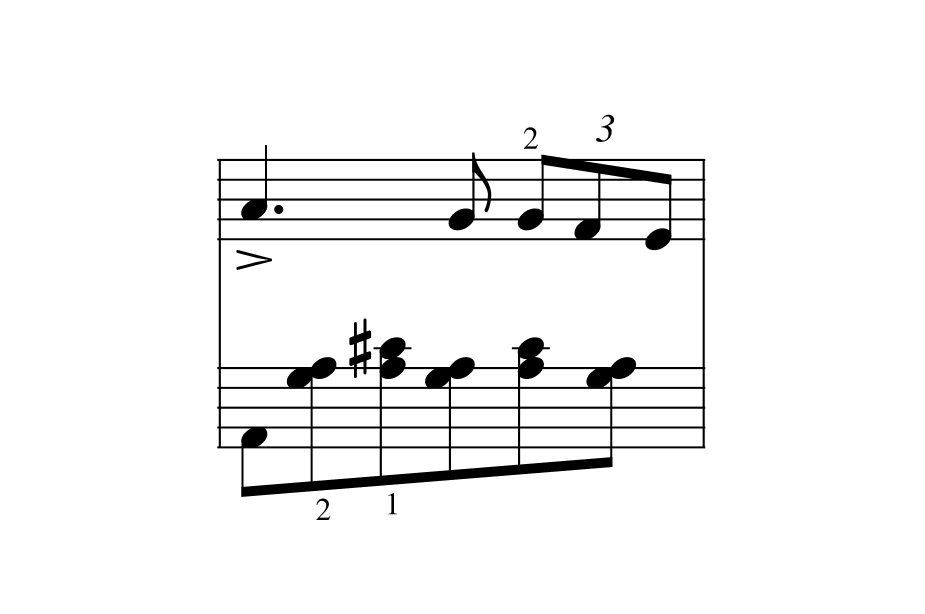
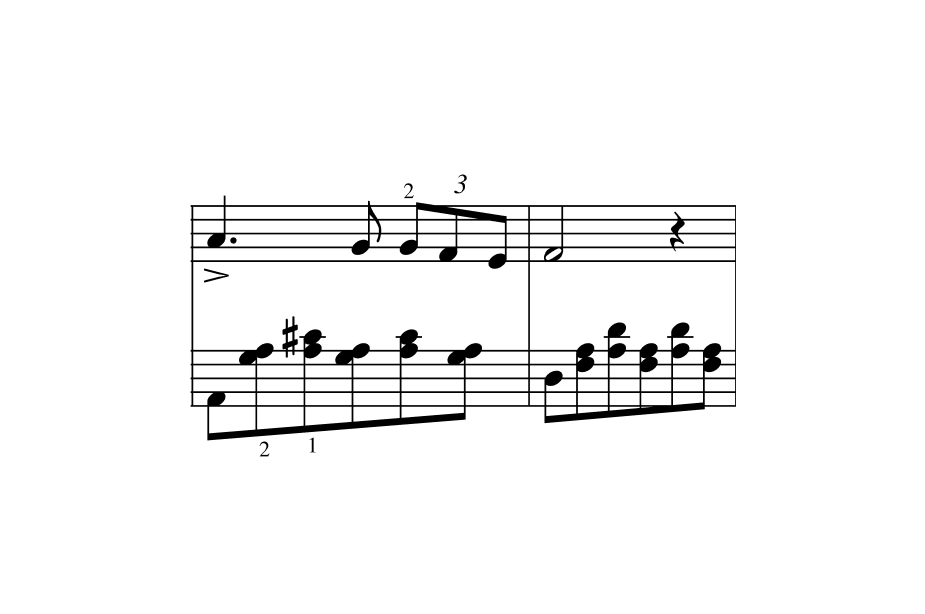
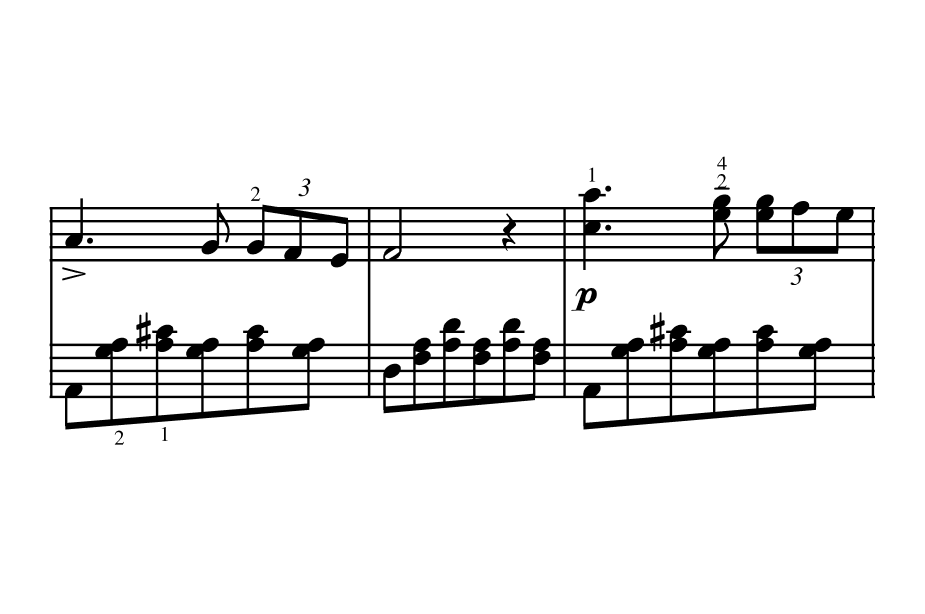
To make that interaction more usable, I introduced a controlled support mechanism: users can now expand the prompt from one bar to two or three bars, depending on how much context they need. This kept the recall exercise intact but made it less punishing. Instead of turning a difficult moment into a dead end, it gave users a way back in.

That small adjustment changed the tone of the interaction quite a bit. The challenge stayed there, but the experience became more supportive and flexible, which encouraged more people in the testing group to finish the exercise.

Memorization prompt with adjustable bar context

Taming the Monster: Making Long Pieces Manageable
For more advanced musicians working with long-form repertoire—concertos, symphonies, and other multi-movement works that can take up to 100+ pages of music—this technique posed a challenge with the volume of practice material. Practicing those pieces through fully random fragments started to feel overwhelming very quickly. Sessions became scattered, and the work felt endless instead of directional.

To solve that, I introduced sectioning and a section selector before each practice session. Instead of approaching a long piece as one giant block of work, users can choose which section or sections they want to focus on—or practice the whole piece. This added structure without making the flow rigid.

In later testing, sectioning even small pieces helped to make practice more intentional and structured. It gave musicians a more systematic and strategic way of working, while still keeping the overall experience flexible.

Section selector for long pieces

Setting the Tempo: Pacing the Preparation

In interviews, musicians didn't describe stage fright as something that suddenly appears out of nowhere. More often, it built up during preparation. A recurring trigger was the combination of time pressure and uncertainty—not knowing if they were on track, how much work was left, or whether they had enough time for the piece to sink into memory.

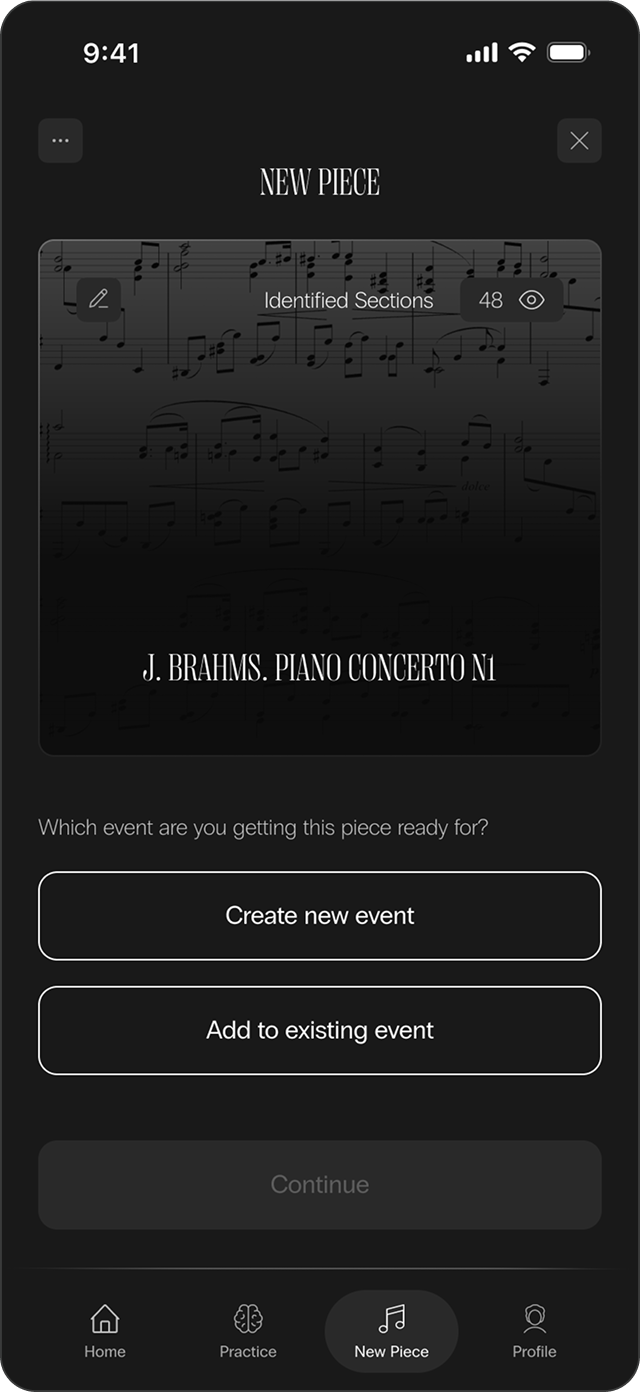
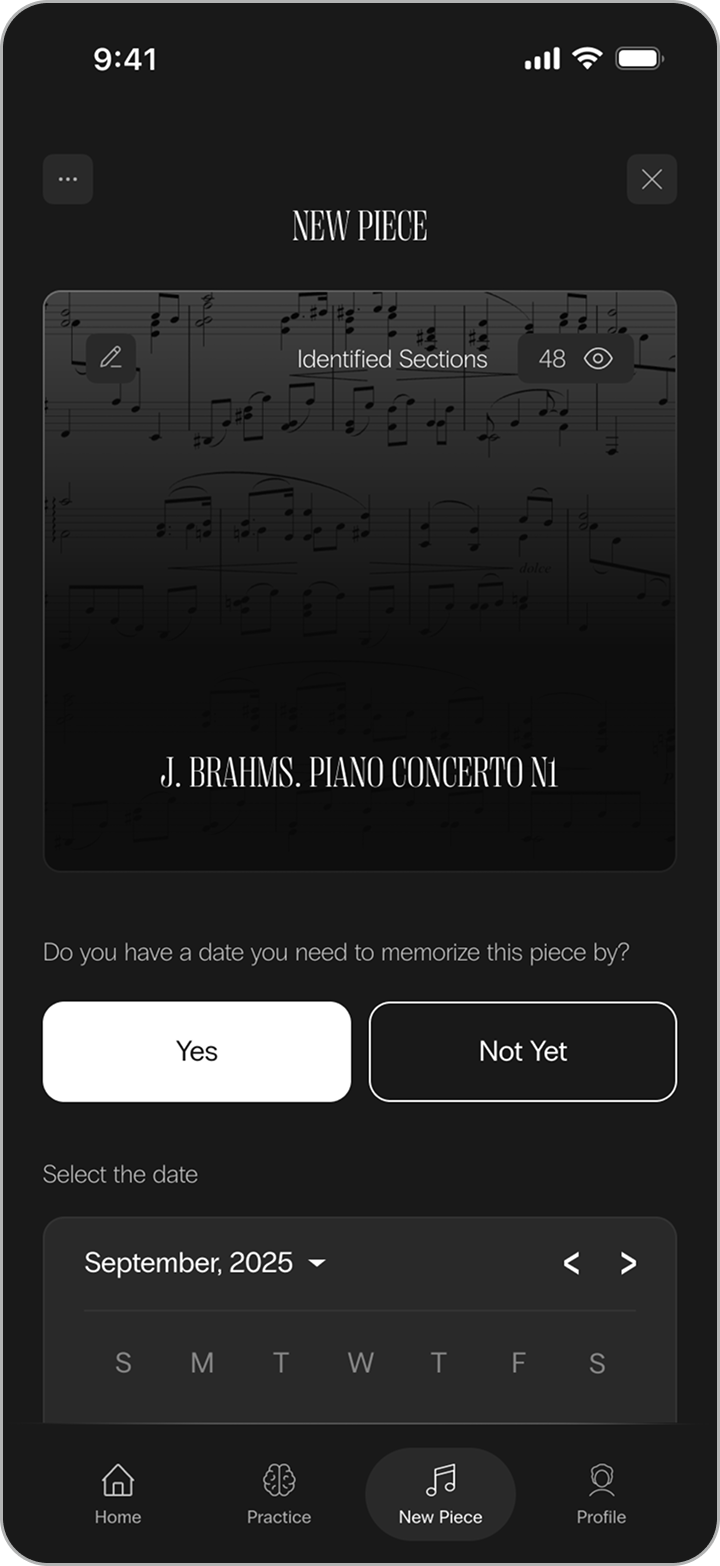
To help musicians stay on track with their preparations, I introduced a goal-setting flow where users could assign a piece to a specific event. Although, in testing, that worked only when someone already had a concrete event to prepare for. Otherwise, it felt too limiting, so I shifted the flow.

First and second iterations of the goal-setting flow

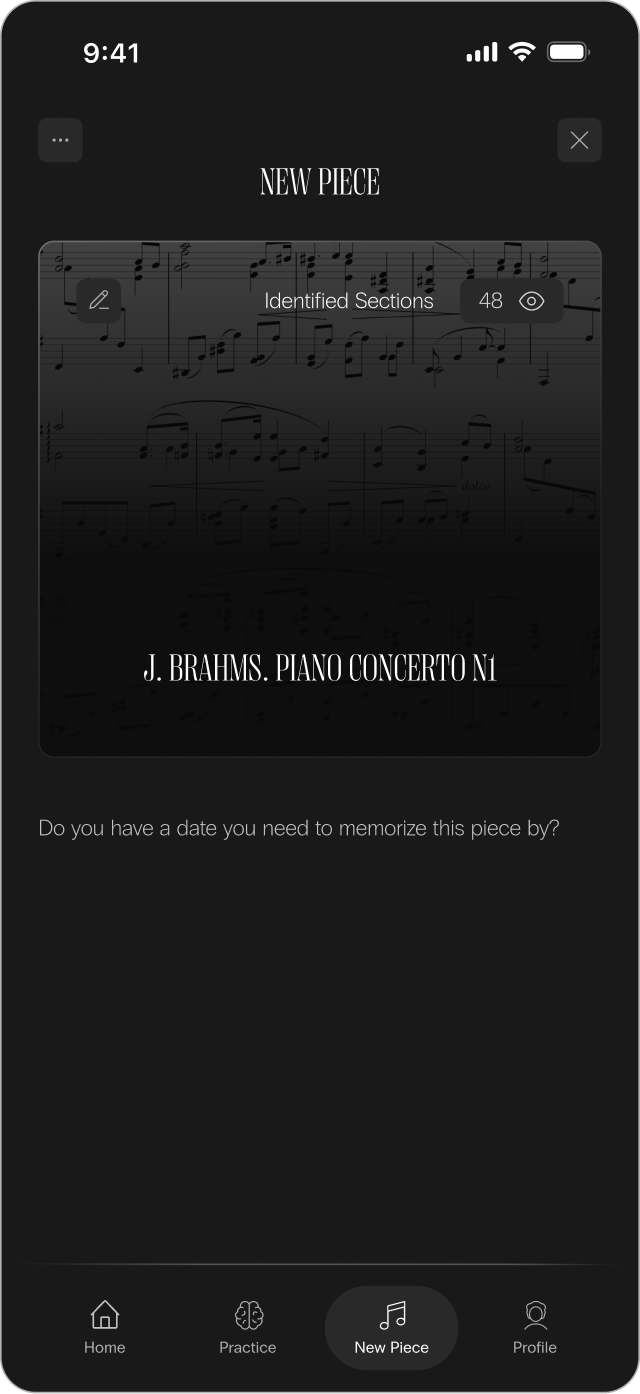
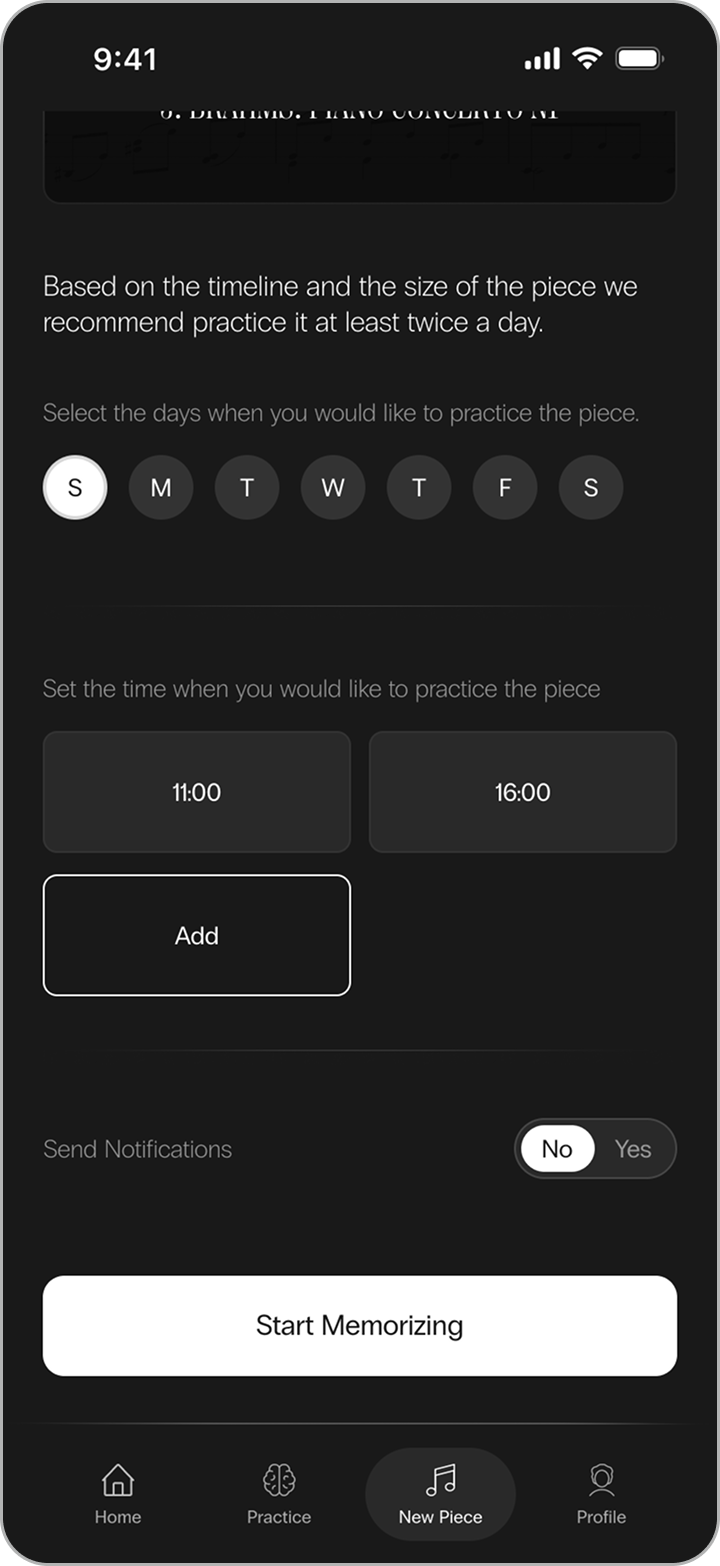
Instead of making events the center of the system, I moved toward a more flexible setup: users can choose to set a date for memorizing a piece, and then turn that deadline into a practice schedule with days, times, and optional notifications. The app also uses the timeline and piece size to recommend a realistic frequency, so scheduling becomes part of the preparation system rather than just a calendar add-on.

This made progress feel more measurable, lowered uncertainty, and helped users build confidence through consistency.

Date selection and practice scheduling screens

The Next Movement: What I'd Improve

  • Growing the Audience by Introducing More Techniques
    From my research, I learned that different musicians rely on different memorization techniques. Even though the technique picked for this stage was universal, broadening the variety of techniques to accommodate the specific needs of different kinds of musicians would be a key step in growing the platform's audience.
  • Differentiating the Musician Segment Further
    “Musicians” is already a much stronger focus than “all performers that experience stage fright,” but it's still quite broad to use the same technique for all.
    The next level would be narrowing the audience further—for example, instrumentalists, vocalists, or advanced students preparing for recitals. A tighter segment would make the product more specific and stronger.
  • Testing Whether the Platform Feels Comprehensive in Practice
    The overall strategy is to manage stage fright indirectly through preparation, structure, and memory work.
    That logic makes sense, but I'd want to validate whether users actually experience the product as one coherent support system in practice, rather than as a set of useful features living next to each other.

Coda: Final Thoughts

There were many possible directions this concept could have taken— mental health support, habit formation, or educational content that would predictably lead me to create another meditation platform curated exclusively for musicians. Researching the problem from different angles allowed me to look deeper below the surface issues and uncover the stronger problem I chose to focus on.

What I still think works best in this project is the framing. It takes an emotional problem and translates it into something design can actually affect in a meaningful way.

Performory is a concept project, but it reflects the kind of product thinking I care about most: starting with a real human tension, finding the behavioural layer underneath it, and designing a system that creates emotional value by being genuinely useful.